Facebook Ads have become one of the most powerful digital marketing tools for businesses of all sizes. With billions of active users across Facebook, Instagram, Messenger, and Audience Network, advertisers can reach highly targeted audiences with precision and measurable results. But many beginners still ask the same question: How do Facebook Ads work?
According to Buffer, Paid advertising on social media is an immediate way to boost the reach of your content — particularly when it comes to a power platform like Facebook.
In this comprehensive guide, we’ll break down Facebook Ads in simple terms, explain how the system works behind the scenes, and show you how businesses use it to generate leads, sales, and brand awareness.
What Are Facebook Ads?
Facebook Ads are paid advertisements that appear across Meta platforms, including:
- Facebook News Feed
- Instagram Feed & Stories
- Facebook Marketplace
- Messenger Inbox
- Audience Network (third-party apps and websites)
These ads are managed through Meta Ads Manager, where advertisers create campaigns, select audiences, set budgets, and track performance.
Unlike traditional advertising, Facebook Ads use user data and behavior to show ads to people most likely to take action.
Why Facebook Ads Are So Powerful
Facebook Ads work effectively because they combine three major advantages:
- Massive Audience Reach – Billions of users worldwide
- Advanced Targeting Options – Interests, behavior, demographics
- Data-Driven Optimization – AI improves ad performance over time
This makes Facebook Ads suitable for small businesses, freelancers, eCommerce stores, and global brands alike.
How Facebook Ads Work: Step-by-Step Explanation
Let’s break down exactly how Facebook Ads work from start to finish.
Step 1: Choose Your Campaign Objective
Every Facebook ad campaign starts with an objective. This tells Facebook what result you want.
Facebook groups objectives into three categories:
1. Awareness Objectives
- Brand Awareness
- Reach
Best for businesses looking to increase visibility.
2. Consideration Objectives
- Traffic
- Engagement
- Video Views
- Lead Generation
- App Installs
Used to build interest and capture leads.
3. Conversion Objectives
- Sales
- Conversions
- Catalog Sales
- Store Traffic
Ideal for driving purchases or specific actions.
Facebook’s algorithm uses your objective to show ads to people most likely to complete that action.
Step 2: Define Your Target Audience
Audience targeting is the core strength of Facebook Ads.
You can target people based on:
Demographics
- Age
- Gender
- Location
- Language
Interests
- Hobbies
- Pages liked
- Online behavior
Behaviors
- Purchase activity
- Device usage
- Travel habits
Custom Audiences
- Website visitors
- Email subscribers
- App users
Lookalike Audiences
- New users similar to your existing customers
This precision ensures your ads reach the right people instead of wasting budget.
Step 3: Set Your Budget and Schedule
Facebook Ads operate on an auction system, meaning advertisers compete for ad placement.
You can choose:
- Daily Budget – Spend a fixed amount per day
- Lifetime Budget – Spend a fixed amount over the campaign duration
You also control:
- Campaign start and end date
- Ad delivery optimization
Facebook automatically distributes your budget to get the best results based on your objective.
Step 4: Choose Ad Placements
Placements define where your ads appear.
You can select:
- Automatic Placements (recommended for beginners)
- Manual Placements (Facebook, Instagram, Messenger, Audience Network)
Automatic placements allow Facebook’s AI to optimize delivery for better performance at lower cost.
Step 5: Create Your Facebook Ad
Now comes the creative part—designing your ad.
A Facebook ad consists of:
- Ad Copy – Headline, primary text, description
- Creative – Image, video, carousel, or collection
- Call-to-Action (CTA) – Shop Now, Learn More, Sign Up
Popular Facebook Ad Formats
- Image Ads
- Video Ads
- Carousel Ads
- Slideshow Ads
- Collection Ads
High-quality visuals and clear messaging significantly impact performance.
Step 6: Facebook Ad Auction Explained
Every time a user opens Facebook or Instagram, an auction happens in milliseconds.
Facebook evaluates ads based on:
- Bid – How much you’re willing to pay
- Estimated Action Rate – Likelihood of user taking action
- Ad Quality & Relevance – Feedback and engagement
The highest overall value wins—not just the highest bid. This ensures better user experience and fair competition.
Step 7: Ad Approval and Delivery
Before your ad goes live, Facebook reviews it for policy compliance.
Ads are checked for:
- Prohibited content
- Misleading claims
- Adult or restricted topics
Once approved, your ad starts showing to your selected audience.
Step 8: Tracking and Optimization
Facebook Ads provide detailed analytics through Ads Manager.
Key metrics include:
- Impressions
- Click-Through Rate (CTR)
- Cost Per Click (CPC)
- Conversion Rate
- Return on Ad Spend (ROAS)
Facebook’s algorithm continuously learns and optimizes ad delivery to improve results over time.
How Facebook Pixel Works
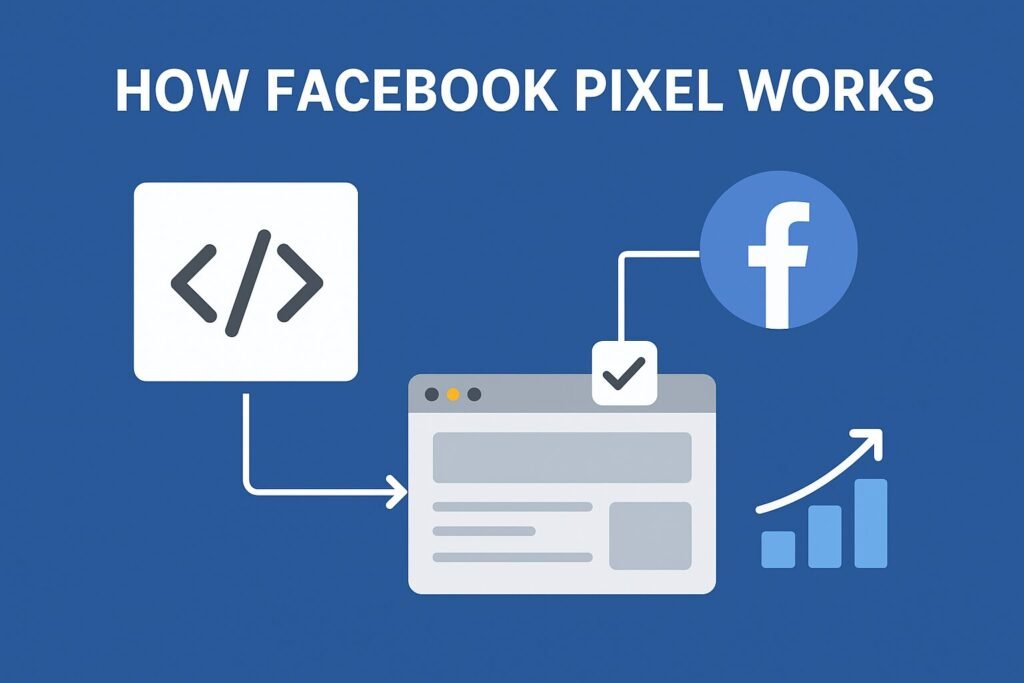
The Facebook Pixel is a tracking code installed on your website.
It helps Facebook:
- Track user actions
- Measure conversions
- Build custom audiences
- Optimize ads for better performance
Pixel data allows advertisers to retarget visitors and scale profitable campaigns.
How Much Do Facebook Ads Cost?
Facebook Ads do not have a fixed cost. Pricing depends on:
- Industry competition
- Audience size
- Ad quality
- Objective
On average:
- Cost per click (CPC): ₹5–₹50
- Cost per 1,000 impressions (CPM): ₹100–₹500
Even small budgets can deliver strong results with proper targeting and creatives.
Benefits of Using Facebook Ads
- Highly targeted advertising
- Flexible budgets
- Real-time performance tracking
- Works for any business size
- Excellent ROI when optimized correctly
Common Facebook Ads Mistakes to Avoid
- Targeting too broad or too narrow
- Ignoring ad creatives
- Not testing multiple ads
- Running ads without tracking setup
- Stopping campaigns too early
Avoiding these mistakes can significantly improve performance.
Are Facebook Ads Worth It in 2025?
Yes, Facebook Ads remain one of the most effective digital advertising platforms when used strategically. With AI-driven optimization, cross-platform reach, and advanced targeting, Facebook Ads continue to deliver consistent results for marketers worldwide.
Advanced Facebook Ads Strategies for Better Results
Once you understand the basics of how Facebook Ads work, the next step is learning how to optimize and scale campaigns effectively. Advanced strategies help advertisers reduce costs, improve conversion rates, and maximize return on ad spend (ROAS).
1. A/B Testing (Split Testing)
A/B testing allows advertisers to compare multiple ad elements to identify what performs best. Facebook Ads Manager makes split testing easy by letting you test:
- Ad creatives (images vs videos)
- Headlines and primary text
- Call-to-action buttons
- Audience segments
- Placements and delivery optimization
Running consistent A/B tests helps you make data-driven decisions instead of relying on assumptions. Even small changes, such as headline wording or image style, can significantly impact results.
2. Retargeting: Converting Warm Audiences
One of the biggest advantages of Facebook Ads is retargeting. Not every user converts on the first visit, and retargeting helps bring them back.
You can retarget:
- Website visitors
- Cart abandoners
- Video viewers
- Instagram profile visitors
- People who engaged with your posts or ads
Retargeting ads usually have lower costs and higher conversion rates because the audience already knows your brand. This makes them ideal for lead generation and sales-focused campaigns.
3. Funnel-Based Facebook Advertising
Successful advertisers use Facebook Ads as part of a structured marketing funnel:
Top of Funnel (TOF)
- Awareness ads
- Video views
- Educational content
Goal: Introduce your brand and build trust
Middle of Funnel (MOF)
- Engagement ads
- Lead magnets
- Retargeting campaigns
Goal: Nurture interest and collect leads
Bottom of Funnel (BOF)
- Conversion ads
- Limited-time offers
- Testimonials and reviews
Goal: Drive sales and conversions
Using funnel-based advertising ensures users receive the right message at the right time.
Creative Best Practices for Facebook Ads
Your ad creative plays a critical role in determining performance. Even the best targeting cannot compensate for weak visuals or unclear messaging.
Tips for High-Performing Facebook Ad Creatives
- Use clear and concise messaging
- Focus on benefits, not just features
- Add social proof like testimonials or reviews
- Use vertical formats for mobile users
- Capture attention in the first 3 seconds of video ads
Facebook is a mobile-first platform, so designing ads specifically for mobile screens improves engagement and click-through rates.
Understanding Learning Phase in Facebook Ads
When you launch or edit a campaign, Facebook enters a learning phase. During this phase, the algorithm tests different audience segments to find the most responsive users.
Important points about the learning phase:
- Results may fluctuate initially
- Avoid making frequent changes
- Allow enough time and budget for optimization
- Aim for at least 50 conversions per ad set per week
Exiting the learning phase leads to more stable performance and predictable results.
Facebook Ads Compliance and Policy Awareness
Facebook has strict advertising policies to protect users. Violating these policies can result in ad disapproval or account restrictions.
Common policy violations include:
- Overpromising results
- Using before-and-after images
- Personal attribute targeting (“Are you struggling with…”)
- Misleading claims or clickbait
Understanding Facebook Ad policies helps ensure smoother approvals and uninterrupted campaigns.
Facebook Ads for Local Businesses and Service Providers
Facebook Ads are not limited to online stores or global brands. Local businesses can also benefit significantly.
Examples include:
- Local gyms and fitness trainers
- Real estate agents
- Clinics and salons
- Restaurants and cafes
- Freelancers and consultants
Using location-based targeting and lead generation forms, local businesses can attract high-intent customers within a specific radius.
Measuring Success Beyond Clicks
Many beginners focus only on clicks, but true success lies in conversions and profitability.
Key performance indicators (KPIs) to monitor:
- Cost per lead (CPL)
- Cost per acquisition (CPA)
- Conversion rate
- ROAS
- Lifetime value (LTV)
Analyzing these metrics helps advertisers scale campaigns confidently and sustainably.
Future of Facebook Advertising
As Meta continues investing in AI, automation, and privacy-focused solutions, Facebook Ads are becoming smarter and more efficient. Features like Advantage+ campaigns, AI-generated creatives, and improved audience modeling are shaping the future of paid social advertising.
Marketers who stay updated with platform changes and focus on value-driven advertising will continue to achieve strong results.
Bonus Tip for Beginners
If you’re new to Facebook Ads, start simple:
- Choose one objective
- Test one audience
- Use one strong creative
- Analyze results before scaling
Consistency and patience are key to long-term success with Facebook advertising.
Final Thoughts
Understanding how Facebook Ads work is essential for anyone serious about digital marketing. From campaign objectives to targeting, bidding, and optimization, Facebook Ads offer complete control and measurable growth opportunities.
If you want to know difference in Facebook Ads and Instagram Ads, Click here to read that article.
Whether you’re a beginner or a business owner, mastering Facebook Ads can help you reach the right audience, increase conversions, and scale your online presence effectively.

This guide breaks down Facebook Ads in a very practical and beginner-friendly way. From understanding objectives and targeting to advanced strategies like retargeting and funnel-based advertising, it covers everything a marketer needs to get real results. A must-read for anyone serious about paid social marketing in 2025.