

Keyword research is the foundation of every successful SEO strategy. Whether you run a blog, an eCommerce website, a SaaS business, or a local business website, your ability to identify the right keywords determines how much organic traffic you can generate.
Many beginners make the mistake of targeting only high-volume keywords. Professional SEO experts know that successful keyword research is about understanding search intent, competition, user behavior, and content opportunities.
In this comprehensive guide, you’ll learn exactly how to do keyword research like a professional, discover the best keyword research techniques, avoid common mistakes, and build an SEO strategy that drives long-term traffic.
What Is Keyword Research?

Keyword research is the process of discovering the words and phrases people type into search engines when looking for information, products, or services.
The goal is to identify keywords that:
- People actually search for
- Match your audience’s intent
- Have achievable competition
- Can generate valuable traffic
- Support your business goals
Every Google search begins with a keyword.
Examples include:
- best gaming laptop under $1000
- SEO checklist
- WordPress speed optimization
- how to bake chocolate cake
- best DSLR camera
Finding these opportunities before your competitors gives you a significant SEO advantage.
Why Keyword Research Is Important
Proper keyword research helps you:
- Increase organic traffic
- Rank for relevant searches
- Understand customer behavior
- Discover new content ideas
- Improve conversion rates
- Reduce wasted SEO effort
- Beat competitors
Without keyword research, you’re simply guessing what people want.
Understand Search Intent First
Professional SEO always starts with search intent.
Google wants to deliver the most relevant result for every search.
There are four main types of search intent.
1. Informational Intent
Users want information.
Examples:
- What is SEO?
- How does AI work?
- Benefits of meditation
Best content:
- Blog posts
- Guides
- Tutorials
2. Navigational Intent
Users want a specific website.
Examples:
- Facebook login
- YouTube Studio
- URLSigma tools
3. Commercial Investigation
Users are researching before buying.
Examples:
- Best gaming monitor
- Ahrefs vs Semrush
- Best budget smartphone
These keywords convert exceptionally well.
4. Transactional Intent
Users are ready to purchase.
Examples:
- Buy gaming chair
- SEO services
- Nike running shoes
These keywords generate the highest revenue.
Step 1: Brainstorm Seed Keywords
Start with broad topics.
For example, if your website is about SEO:
Seed keywords include:
- SEO
- Keyword research
- Backlinks
- Technical SEO
- On-page SEO
- Local SEO
- Content marketing
Seed keywords help keyword research tools generate thousands of related ideas.
Step 2: Use Google Autocomplete

Type your keyword into Google.
Google automatically suggests popular searches.
Example:
Typing:
Keyword research
May produce:
- keyword research tool
- keyword research for SEO
- keyword research checklist
- keyword research free
- keyword research strategy
These are real user searches.
Step 3: Check Google’s People Also Ask
People Also Ask boxes reveal questions users frequently search.
Examples:
- How do beginners do keyword research?
- What is keyword difficulty?
- Which keyword tool is best?
- How many keywords should a page target?
Each question can become a separate section in your article.
Step 4: Analyze Related Searches
Scroll to the bottom of Google search results.
You’ll find related searches that often uncover:
- Long-tail keywords
- Semantic keywords
- User intent
- Content opportunities
Step 5: Use Free Keyword Research Tools
Some excellent free tools include:
- Google Keyword Planner
- Google Trends
- Google Search Console
- Bing Webmaster Tools
- Keyword Surfer
- AnswerThePublic (limited)
- URLSigma SEO Tools
These provide valuable keyword ideas without requiring expensive subscriptions.
Step 6: Use Premium SEO Tools
Professional SEOs rely on advanced platforms.
Popular choices include:
- Ahrefs
- Semrush
- Moz
- SE Ranking
- Mangools
- Serpstat
These tools reveal:
- Search volume
- Keyword difficulty
- Competitor rankings
- Traffic estimates
- Backlinks
- SERP history
Step 7: Analyze Search Volume
Search volume indicates how often a keyword is searched monthly.
Example:
| Keyword | Monthly Searches |
|---|---|
| SEO | 110,000 |
| Keyword research | 27,000 |
| Best SEO tools | 15,000 |
| Keyword clustering | 900 |
Higher isn’t always better.
Sometimes smaller keywords produce higher conversions.
Step 8: Evaluate Keyword Difficulty
Keyword Difficulty estimates how difficult ranking will be.
General guideline:
| KD Score | Competition |
|---|---|
| 0–10 | Very Easy |
| 11–20 | Easy |
| 21–40 | Moderate |
| 41–60 | Difficult |
| 61–100 | Very Competitive |
New websites should prioritize easier keywords.
Step 9: Focus on Long-Tail Keywords
Long-tail keywords contain three or more words.
Instead of:
SEO
Target:
How to do keyword research for a new website
Advantages include:
- Less competition
- Higher conversions
- Better ranking potential
- Clear user intent
Step 10: Study Your Competitors
Professional SEO experts always analyze competitors.
Check:
- Which keywords they rank for
- Their top pages
- Backlinks
- Internal linking
- Content depth
Then create something significantly better.
Step 11: Group Similar Keywords
Don’t create one page for every tiny keyword variation.
Instead, cluster related keywords.
Example:
Primary keyword:
How to do keyword research
Related keywords:
- Keyword research guide
- SEO keyword research
- Keyword research strategy
- Keyword analysis
- Find SEO keywords
One comprehensive article can rank for hundreds of related keywords.
Step 12: Find Question Keywords
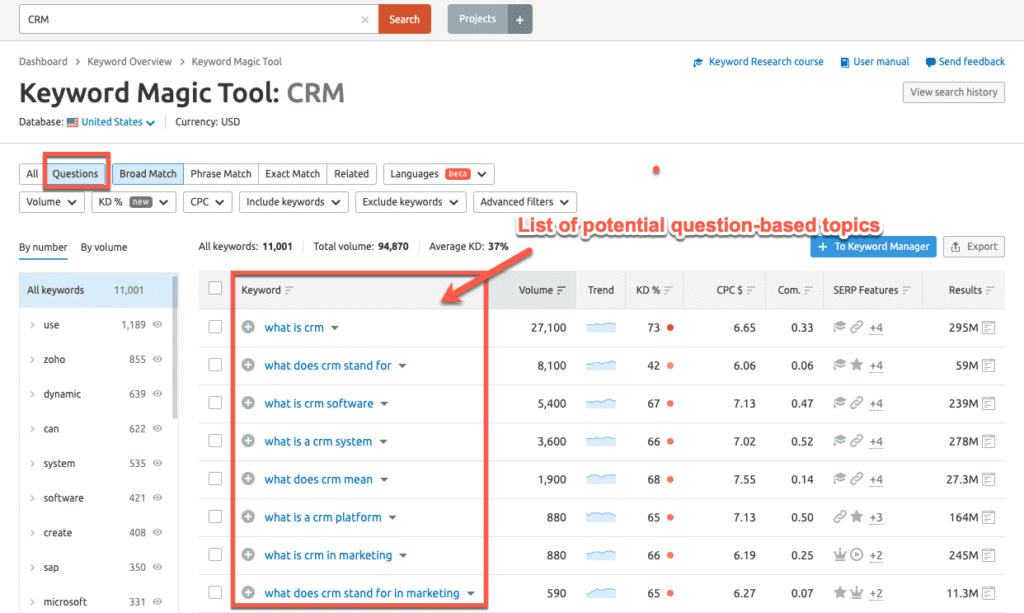
Question keywords often appear in Featured Snippets.
Examples:
- What is keyword intent?
- How do professionals find keywords?
- Which keyword tool is best?
- Why is keyword research important?
Include these as H2 or H3 headings.
Step 13: Look for Low-Competition Opportunities
Great keywords usually have:
- Medium search volume
- Low competition
- Strong commercial value
- High relevance
These provide the fastest SEO wins.
Step 14: Check Seasonal Trends
Google Trends helps identify:
- Seasonal searches
- Rising topics
- Declining interest
- Geographic popularity
Plan content before search demand peaks.
Step 15: Understand Keyword Metrics
Professional SEOs evaluate several metrics.
Search Volume
Monthly searches.
Keyword Difficulty
Ranking competition.
CPC
Average advertising cost.
Higher CPC often indicates commercial value.
Click Potential
Some searches receive many clicks.
Others are answered directly by Google.
Search Intent
Always optimize for user intent rather than search volume alone.
Common Keyword Research Mistakes
Avoid these mistakes:
- Targeting only high-volume keywords
- Ignoring search intent
- Writing multiple pages targeting identical keywords
- Not analyzing competitors
- Skipping long-tail keywords
- Ignoring local keywords
- Choosing irrelevant keywords
- Never updating keyword strategy
Keyword Research Workflow Used by Professionals
A simple workflow:
- Choose your topic.
- Generate seed keywords.
- Expand with keyword tools.
- Analyze search intent.
- Check competition.
- Find long-tail opportunities.
- Group keywords.
- Create content clusters.
- Publish optimized articles.
- Track rankings.
- Update content regularly.
Best Practices for Keyword Research
- Target one primary keyword per page.
- Include secondary keywords naturally.
- Optimize headings.
- Write for humans first.
- Build topical authority.
- Monitor keyword rankings monthly.
- Refresh outdated content.
- Create internal links.
- Focus on search intent over volume.
- Build content around topic clusters.
Recommended Keyword Research Tools
Free
- Google Search Console
- Google Trends
- Google Keyword Planner
- Google Autocomplete
- Google Related Searches
- URLSigma SEO Tools
Paid
- Ahrefs
- Semrush
- SE Ranking
- Moz Pro
- Serpstat
- Mangools
Recommended URLSigma Tools for Keyword Research
Keyword research becomes much easier when you use the right SEO tools. Here are some free URLSigma tools that can help you discover keywords, optimize your content, and improve your search engine rankings.
- Keyword Research Tool – Discover relevant keyword ideas, search intent, and related search terms for your target topic.
- Search Volume Checker – Estimate monthly search demand to prioritize high-value keywords.
- Long Tail Keyword Generator – Generate low-competition, highly targeted keyword variations that are easier to rank for.
- LSI Keyword Generator – Find semantically related keywords to improve topical relevance and on-page SEO.
- Question Keyword Generator – Discover common questions users ask to optimize for featured snippets and FAQ sections.
- Keyword Density Checker – Analyze keyword usage to ensure your content is optimized without overusing keywords.
Final Thoughts
Keyword research is not about finding the biggest keywords—it’s about finding the right keywords. By understanding user intent, evaluating competition, using reliable tools, and creating comprehensive, high-quality content, you can build a sustainable SEO strategy that generates consistent organic traffic.
Remember that keyword research is an ongoing process. Search behavior evolves, competitors publish new content, and Google’s algorithms change over time. Regularly reviewing your keyword portfolio and updating your content will help maintain and improve your rankings.
When combined with strong on-page SEO, technical optimization, internal linking, and quality backlinks, professional keyword research becomes one of the most powerful drivers of long-term search engine success.
Frequently Asked Questions (FAQ)
What is keyword research in SEO?
Keyword research is the process of finding the search terms users enter into search engines so you can create content that matches their needs and ranks higher in search results.
Which keyword research tool is best?
There isn’t a single best tool for everyone. Beginners can start with Google Keyword Planner and Google Search Console, while professionals often use Ahrefs, Semrush, or SE Ranking for more advanced data.
Should beginners target high-volume keywords?
Generally, no. New websites benefit more from targeting long-tail, low-competition keywords because they are easier to rank for and often have higher conversion rates.
What is keyword difficulty?
Keyword difficulty is a metric that estimates how challenging it will be to rank for a specific keyword based on the strength of existing pages ranking in search results.
How many keywords should one page target?
Focus on one primary keyword supported by several closely related secondary and semantic keywords. A well-optimized page can naturally rank for dozens or even hundreds of related search queries.
How often should keyword research be updated?
Review your keyword strategy every three to six months, or sooner if your industry changes rapidly. Updating content with new keyword opportunities helps maintain and improve rankings.
Is keyword stuffing good for SEO?
No. Keyword stuffing can harm readability and may negatively impact search performance. Use keywords naturally within valuable, user-focused content.
Can I rank without expensive SEO tools?
Yes. Free resources like Google Search Console, Google Trends, Google Autocomplete, and Google Keyword Planner can help you build an effective keyword strategy. Paid tools mainly provide deeper insights and save time.
