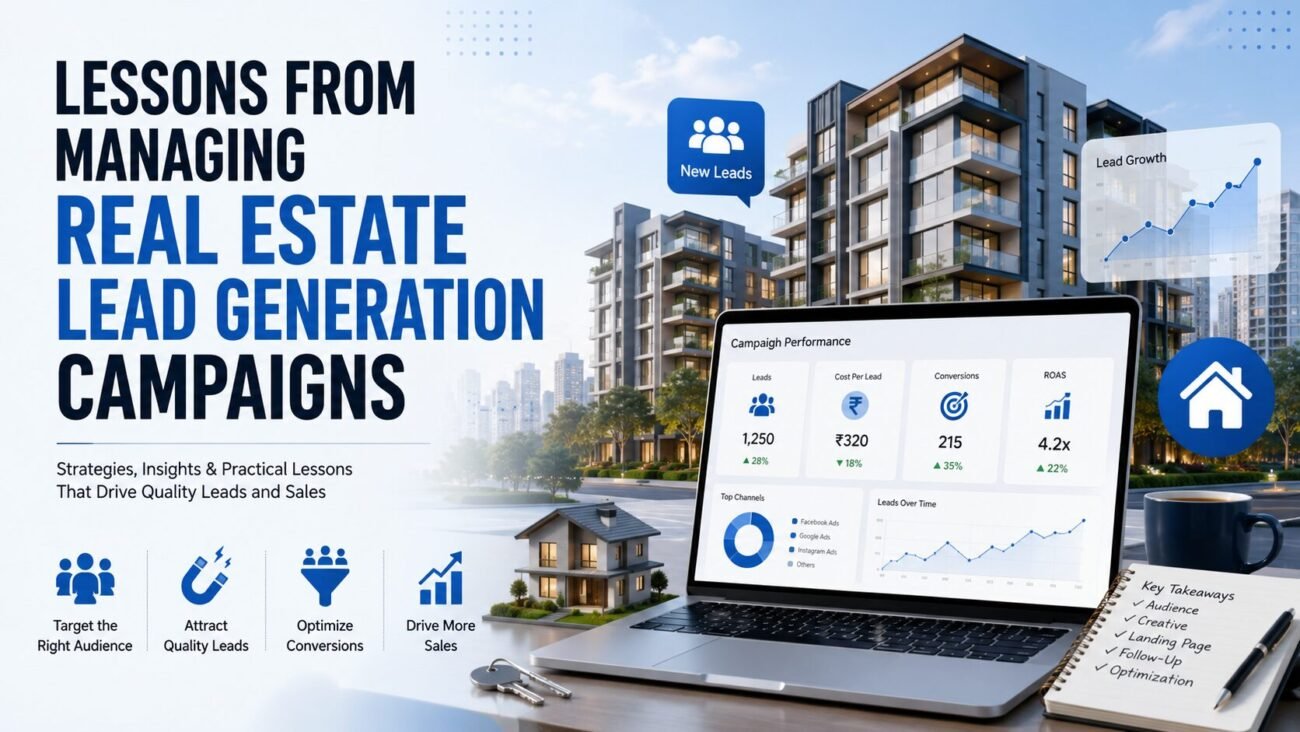
The real estate industry has become one of the most competitive sectors in digital marketing. Buyers are more informed than ever before, competition continues to increase, and advertising costs are steadily rising. Running successful lead generation campaigns is no longer about simply creating attractive advertisements—it requires a combination of strategy, audience understanding, creative optimization, and continuous testing.
Whether you’re marketing residential apartments, luxury villas, commercial properties, or plotted developments, every campaign teaches valuable lessons. Some campaigns deliver excellent results, while others reveal hidden weaknesses that can become opportunities for improvement.
After managing multiple real estate lead generation campaigns across different property segments, several recurring patterns become clear. These lessons apply regardless of the project size or advertising budget and can significantly improve campaign performance.
1. Lead Quality Is More Important Than Lead Quantity

One of the biggest mistakes in real estate marketing is measuring success only by the number of leads generated.
Generating 500 leads sounds impressive, but if only a handful are genuinely interested buyers, the campaign isn’t delivering real business value.
Instead, marketers should focus on:
- Qualified prospects
- Budget compatibility
- Purchase intent
- Timeline for buying
- Location preference
A campaign producing 80 highly qualified leads will often outperform one generating 500 low-quality inquiries.
Sales teams appreciate quality over volume because it allows them to spend time with prospects who are genuinely interested.
2. Understanding the Target Audience Changes Everything
Real estate is not a one-size-fits-all business.
A luxury apartment campaign requires a completely different strategy than an affordable housing project.
Different buyers respond to different messaging.
For example:
First-Time Buyers
- EMI affordability
- Government schemes
- Easy financing
- Family-friendly communities
Luxury Buyers
- Lifestyle
- Exclusivity
- Premium amenities
- Investment potential
Investors
- ROI
- Rental demand
- Future appreciation
- Infrastructure development
When campaigns speak directly to the intended audience, engagement rates and conversion rates improve significantly.
3. Creative Content Has a Bigger Impact Than Budget

Many advertisers believe increasing the budget automatically improves results.
In reality, poor creatives simply consume more budget without improving conversions.
Successful campaigns often include:
- High-quality property images
- Short walkthrough videos
- Drone footage
- Customer testimonials
- Lifestyle-focused visuals
- Clear call-to-action
People don’t buy buildings.
They buy a lifestyle, convenience, security, and future aspirations.
Creative assets should communicate that emotional value rather than just displaying floor plans and pricing.
4. Speed of Lead Response Matters
One of the most overlooked aspects of lead generation is what happens after someone submits their information.
Research consistently shows that contacting prospects quickly improves the chances of meaningful conversations.
If a sales executive waits several hours—or even until the next day—to call a lead, that prospect may already have spoken with competing developers.
An effective process includes:
- Instant lead notifications
- Immediate acknowledgment messages
- Prompt follow-up calls
- Automated WhatsApp communication
- Scheduled reminders
Marketing generates opportunities, but timely follow-up converts those opportunities into sales conversations.
5. Landing Pages Influence Conversion Rates

Many campaigns send traffic to generic websites.
This often reduces conversion rates because visitors struggle to find relevant information.
A high-converting landing page should include:
- Project highlights
- Property images
- Pricing information (when appropriate)
- Floor plans
- Location map
- Amenities
- Testimonials
- Builder credibility
- Simple lead form
- Clear call-to-action
The fewer distractions a landing page has, the better it generally performs.
6. Hyperlocal Targeting Improves Campaign Efficiency
One lesson repeatedly observed is that location targeting significantly influences campaign performance.
Rather than targeting an entire state or country, successful campaigns often focus on:
- Nearby residential areas
- Existing premium neighborhoods
- Business districts
- IT parks
- Industrial hubs
- Educational institutions
People usually prefer properties that reduce commute times and improve convenience.
Hyperlocal targeting also reduces wasted advertising spend.
7. Remarketing Should Never Be Ignored
Most visitors don’t convert during their first interaction.
They browse.
Compare.
Research.
Discuss with family.
Then return later.
Remarketing helps maintain visibility during this decision-making process.
Common remarketing audiences include:
- Website visitors
- Video viewers
- Previous lead form visitors
- Social media engagement audiences
- Email subscribers
Repeated exposure builds familiarity and trust, increasing the likelihood of conversion over time.
8. Data Should Drive Every Decision
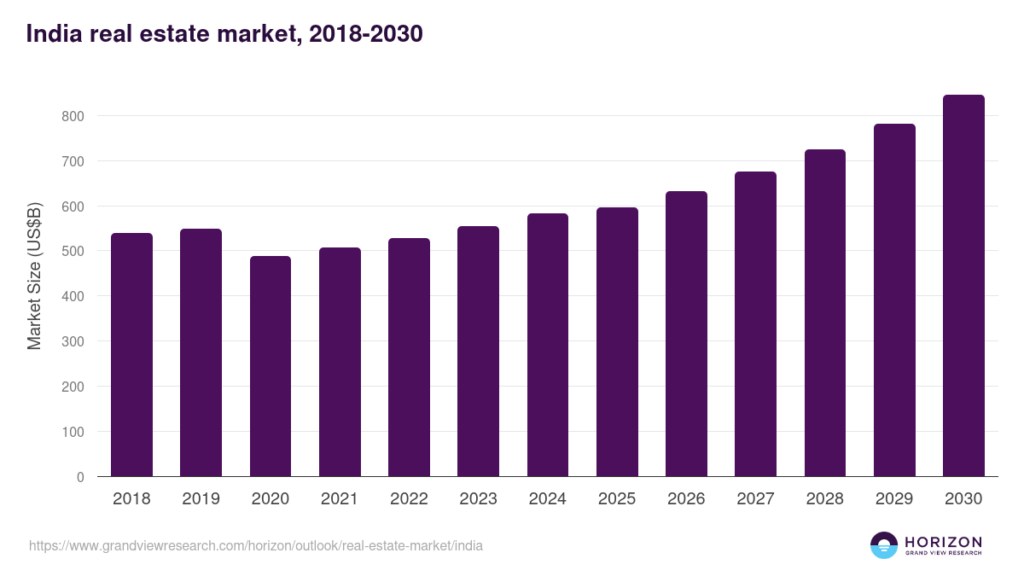
Successful campaigns rely on continuous optimization rather than assumptions.
Important metrics include:
- Cost per Lead (CPL)
- Click-Through Rate (CTR)
- Conversion Rate
- Landing Page Conversion
- Cost per Qualified Lead
- Appointment Rate
- Site Visit Rate
Monitoring these indicators allows marketers to identify what’s working and adjust campaigns before budgets are wasted.
9. A/B Testing Delivers Better Results
Even experienced marketers cannot accurately predict which advertisement will perform best.
Testing is essential.
Common A/B tests include:
- Headlines
- Images
- Videos
- Call-to-action buttons
- Lead forms
- Audience segments
- Ad copy
Small improvements across multiple campaign elements can produce meaningful gains in overall performance.
10. Trust Is a Major Conversion Factor
Buying property is one of the largest financial decisions people make.
Potential buyers naturally seek reassurance before sharing their contact information.
Trust can be established through:
- Customer reviews
- Builder history
- Project approvals
- Awards
- Construction updates
- Transparent pricing
- Professional branding
The more confidence prospects have in the developer, the more likely they are to become qualified leads.
11. Mobile Experience Cannot Be Ignored
A significant portion of real estate traffic now comes from smartphones.
If the website loads slowly or the lead form is difficult to complete on mobile devices, potential customers may leave before submitting their information.
Key improvements include:
- Fast loading speed
- Mobile-friendly layouts
- Click-to-call buttons
- WhatsApp integration
- Short forms
- Optimized images
Even minor improvements in mobile usability can positively impact conversion rates.
12. Marketing and Sales Must Work Together
Even the best advertising campaigns can underperform if the sales process isn’t aligned.
Successful teams share information regularly, including:
- Common customer objections
- Frequently asked questions
- Budget trends
- Competitor insights
- Lead quality feedback
This collaboration helps marketers refine targeting and messaging while enabling sales teams to better understand customer expectations.
13. Campaign Optimization Never Stops
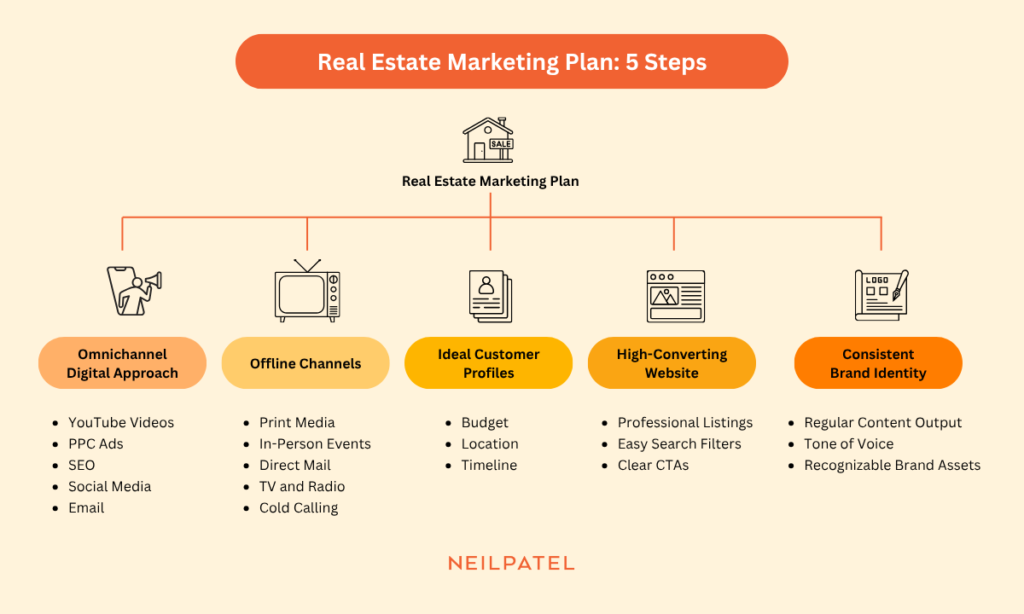
Digital marketing is constantly evolving.
Audience behavior changes.
Advertising platforms introduce new features.
Competitors adjust their strategies.
What worked six months ago may not deliver the same results today.
Regular optimization includes:
- Updating creatives
- Refreshing ad copy
- Testing new audiences
- Reviewing bidding strategies
- Monitoring analytics
- Improving landing pages
Continuous improvement is one of the most reliable ways to maintain campaign performance over time.
14. Transparency Builds Better Relationships
Property buyers value clear communication.
Hidden charges, misleading advertisements, or unrealistic promises can damage credibility and reduce long-term trust.
Effective campaigns provide accurate information about:
- Pricing
- Payment plans
- Amenities
- Construction timelines
- Legal approvals
- Possession dates
Transparency not only improves customer confidence but also helps attract more qualified inquiries.
15. Success Is Measured Beyond the Lead Form
Generating leads is only the beginning.
The true success of a real estate campaign is measured through the complete customer journey:
- Qualified leads
- Phone conversations
- Site visits
- Test visits
- Booking amounts
- Final property sales
- Customer satisfaction
By evaluating the entire funnel rather than focusing solely on lead numbers, businesses gain a more accurate understanding of campaign performance and return on investment.
Final Thoughts
Managing real estate lead generation campaigns offers valuable insights into how buyers research, evaluate, and choose properties. While every project has unique challenges, certain principles remain consistent: understand the audience, prioritize lead quality, create compelling creatives, optimize landing pages, respond quickly to inquiries, and use data to guide decisions.
Digital marketing is not a one-time effort but an ongoing process of testing, learning, and refining. Campaigns that continuously adapt to changing market conditions are better positioned to generate qualified leads and support long-term business growth.
You can find more Meta Campaigns strategies at our category page for Meta Campaigns
For developers, builders, and marketing professionals alike, these lessons provide a practical framework for improving campaign performance while making more efficient use of advertising budgets. By focusing on strategy, transparency, and continuous optimization, real estate businesses can build stronger relationships with potential buyers and achieve more sustainable marketing results.
