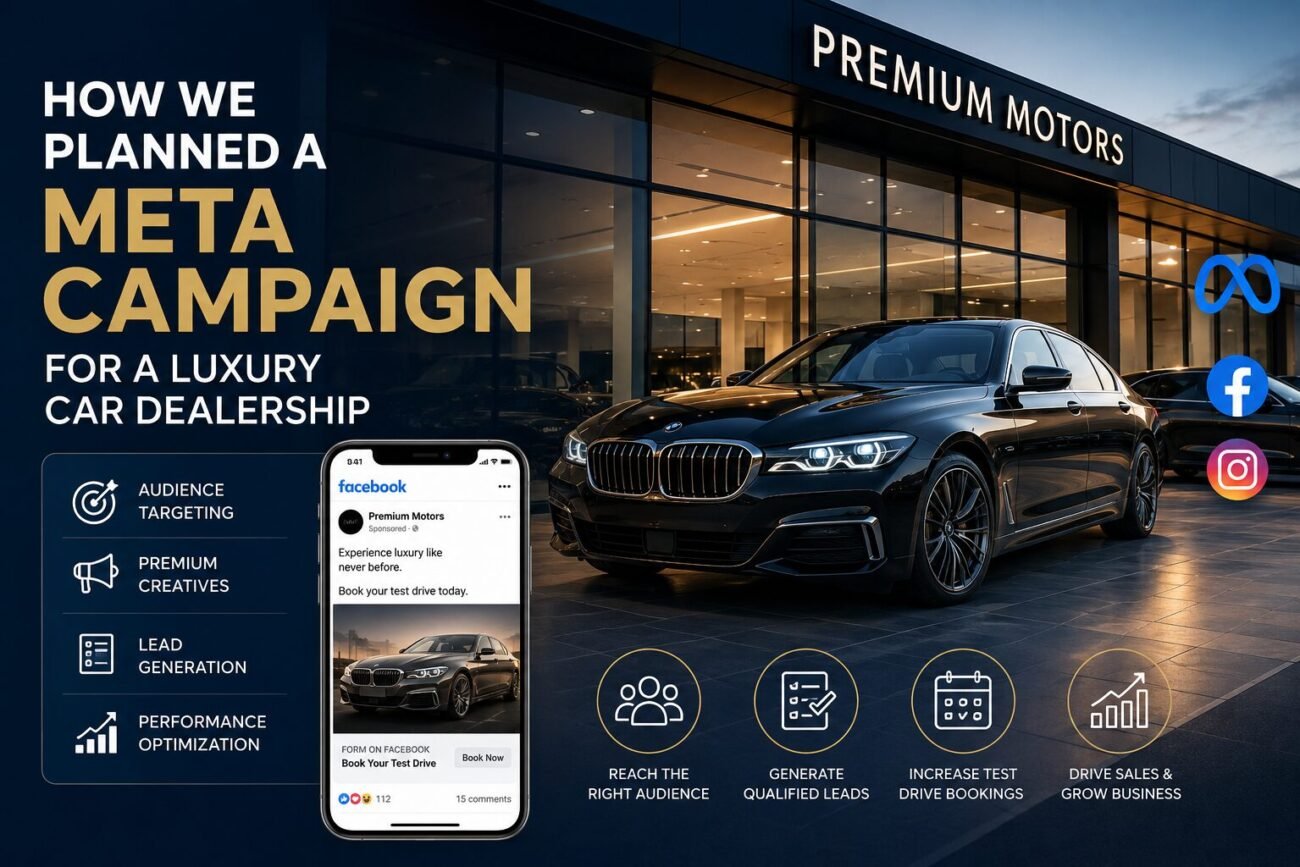
Luxury car marketing is fundamentally different from marketing mass-market vehicles. A luxury automobile is more than a mode of transportation—it is a statement of success, craftsmanship, technology, and lifestyle. Because of this, the approach to digital advertising requires careful planning, premium creative assets, highly refined audience targeting, and an effective lead qualification strategy.
When our team was tasked with planning a Meta advertising campaign for a luxury car dealership, the objective wasn’t simply to generate clicks or increase website traffic. The primary goal was to attract genuinely interested buyers who would be willing to book a test drive and eventually purchase a premium vehicle.
This article walks through the planning process behind the campaign, highlighting the strategies, audience selection, creative development, lead generation techniques, and optimization methods that formed the foundation of a successful luxury automotive marketing campaign.
Understanding the Objective
Every successful advertising campaign begins with a clearly defined objective.
Rather than focusing on vanity metrics such as impressions, likes, or video views, we established a business-focused goal:
- Generate qualified leads
- Increase test drive bookings
- Improve dealership walk-ins
- Build awareness among affluent buyers
- Maximize return on advertising spend
This objective influenced every decision that followed—from audience targeting to ad creatives and campaign optimization.
Luxury vehicle purchases involve a longer buying cycle than regular automobiles. Prospective buyers often compare multiple brands, research extensively, and visit dealerships before making a purchase. Therefore, our campaign had to nurture interest while encouraging immediate action.
Identifying the Target Audience
One of the biggest mistakes advertisers make is targeting everyone.
Luxury vehicle buyers represent a very specific demographic.
We began by identifying individuals who matched the dealership’s ideal customer profile.
Some important characteristics included:
- Business owners
- Entrepreneurs
- Corporate executives
- Doctors
- Chartered accountants
- Architects
- High-income professionals
- Property investors
- Senior government officials
Age also played an important role.
Instead of targeting a very broad age group, we focused primarily on audiences between 30 and 55 years old, as this segment generally possesses stronger purchasing power.
Location targeting was equally important.
Rather than running nationwide campaigns, we concentrated on the dealership’s primary service area and nearby cities where buyers would realistically travel for a purchase.
Choosing the Campaign Objective
Meta offers several campaign objectives, including:
- Traffic
- Engagement
- Awareness
- Sales
- Leads
For this campaign, the Leads objective was the obvious choice.
Our intention wasn’t merely to bring visitors to a landing page.
Instead, we wanted Meta to optimize delivery toward users most likely to submit their contact information.
Using Instant Forms also reduced friction because potential customers could fill in their details without leaving Facebook or Instagram.
This significantly improved conversion rates compared to directing users to external websites.
Developing the Creative Strategy
Luxury brands rely heavily on visual storytelling.
People purchasing premium vehicles are influenced emotionally before they are convinced logically.
The creative strategy therefore emphasized:
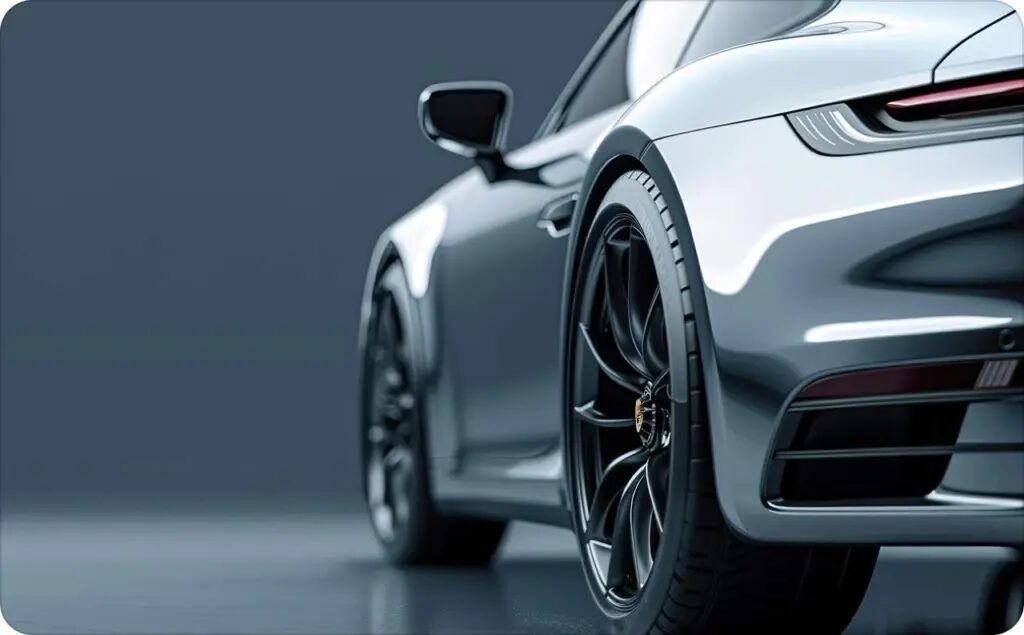
Premium Photography
High-quality vehicle images showcasing:
- Front profile
- Interior
- Dashboard
- Signature lighting
- Alloy wheels
- Premium upholstery
Every image needed to communicate sophistication.
Lifestyle Imagery
Rather than only displaying the vehicle, we focused on portraying the lifestyle associated with ownership.
Examples included:
- Executive arriving at a business meeting
- Couple enjoying a weekend drive
- Luxury evening cityscape
- Scenic highway journeys
This allowed viewers to imagine themselves owning the vehicle.
Short Cinematic Videos
Video consistently performs better on Meta platforms.
Instead of lengthy promotional videos, we planned short videos between 15 and 30 seconds featuring:
- Dynamic driving shots
- Interior cabin experience
- Ambient lighting
- Infotainment system
- Driver assistance technology
- Brand logo reveal
These videos were designed to capture attention within the first three seconds.
Writing Compelling Ad Copy
Luxury advertising requires elegance.
Instead of aggressive sales messaging, the copy focused on aspiration and exclusivity.
For example:
“Luxury isn’t about reaching your destination.
It’s about how you arrive.
Experience exceptional craftsmanship, cutting-edge technology, and unparalleled comfort.
Book your exclusive test drive today.”
The copy highlighted:
- Performance
- Innovation
- Comfort
- Prestige
- Safety
- Limited availability
- Personalized dealership experience
The call-to-action remained simple:
Book Your Test Drive
Building a Lead Qualification System
Generating leads is easy.
Generating quality leads is far more challenging.
We carefully designed the Instant Form to filter serious buyers.
Instead of asking dozens of questions, we kept the form concise while collecting meaningful information.
Fields included:
- Name
- Mobile Number
- Email Address
- Preferred Contact Time
Additional qualifying questions included:
- When do you plan to purchase your next vehicle?
- Which model interests you most?
- Have you previously owned a premium vehicle?
These questions helped the dealership prioritize follow-ups.
Audience Targeting Strategy
Meta’s strength lies in its sophisticated audience capabilities.
We divided our targeting into multiple audience groups.
Interest-Based Audiences
People interested in:
- Luxury automobiles
- Business leadership
- Finance
- Entrepreneurship
- Executive lifestyle
- High-end travel
- Golf
- Premium watches
- Luxury hotels
Lookalike Audiences
Existing customer data proved extremely valuable.
Using previous customer information, Meta created Lookalike Audiences consisting of users with similar characteristics.
These audiences often delivered significantly lower acquisition costs.
Remarketing
Remarketing formed a major part of the campaign.
We targeted:
- Website visitors
- Instagram profile visitors
- Facebook page visitors
- Video viewers
- Previous lead submissions
- Existing customer database
Remarketing audiences generally convert at much higher rates because they are already familiar with the dealership.
Campaign Budget Allocation
Instead of investing the entire budget into one audience, we diversified spending.
An example allocation looked like this:
- 50% Prospecting Campaign
- 30% Remarketing Campaign
- 20% Lookalike Campaign
This approach balanced customer acquisition with conversion optimization.
Daily budget adjustments were made based on campaign performance.
Winning audiences received increased investment, while underperforming ad sets were gradually reduced.
A/B Testing Every Element
Optimization never stops.
Rather than assuming one advertisement would outperform others, we planned multiple variations.
We tested:
- Headlines
- Images
- Videos
- Primary text
- Call-to-action buttons
- Audience segments
- Placements
- Instant Forms
Even small improvements in click-through rate or conversion rate could significantly reduce the overall cost per lead.
Measuring Success
Tracking meaningful metrics was essential.
Instead of celebrating impressions or page likes, we monitored:
- Cost Per Lead (CPL)
- Test Drive Bookings
- Lead Quality
- Contact Rate
- Appointment Rate
- Showroom Visits
- Vehicle Bookings
- Return on Ad Spend (ROAS)
Ultimately, vehicle sales—not clicks—determined campaign success.
Sales Team Coordination
Marketing and sales cannot operate independently.
We ensured the dealership’s sales advisors received leads immediately after submission.
Quick follow-up dramatically increases conversion rates.
Best practices included:
- Calling within 10 minutes
- Personalized communication
- Scheduling appointments
- Confirming test drive timing
- Sending reminder messages
- Following up consistently
Fast response times often separated successful dealerships from average performers.
Mobile-First Optimization

Most Meta users browse using smartphones.
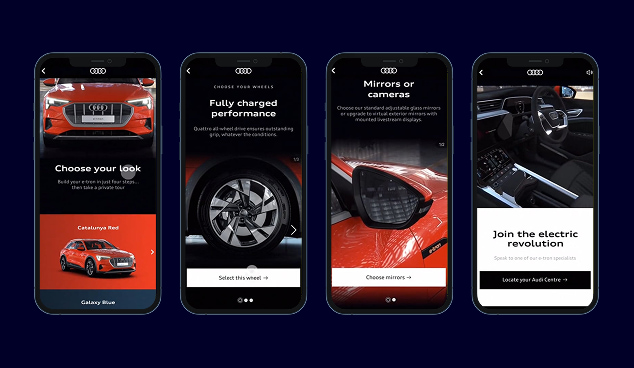
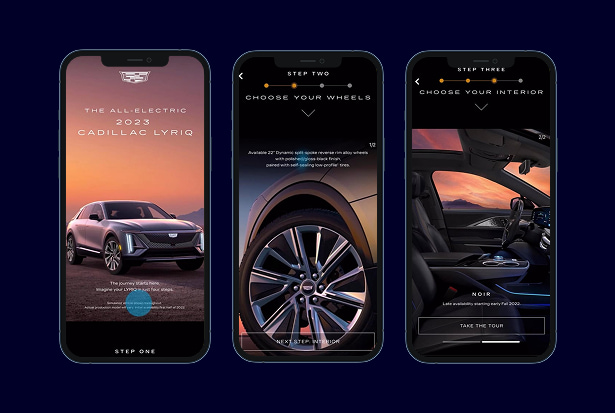
Every advertisement was designed for mobile viewing.
This meant:
- Vertical videos
- Minimal text
- Clear visuals
- Large typography
- Fast-loading forms
- Simple user experience
Reducing unnecessary friction improved lead completion rates.
Building Trust
Purchasing a luxury vehicle requires confidence.
Our campaign therefore incorporated trust-building elements throughout.
These included:
- Customer testimonials
- Verified dealership credentials
- Manufacturer-authorized branding
- Professional showroom photography
- Awards and recognitions
- Genuine customer reviews
Trust reduces hesitation and increases conversions.
Continuous Optimization
Launching the campaign marked only the beginning.
Each day, campaign performance was reviewed.
Questions included:
- Which audience generated the lowest CPL?
- Which advertisement produced the highest click-through rate?
- Which creative delivered the most test drive bookings?
- Which placements performed best?
- Which demographic converted most effectively?
Data-driven decisions replaced assumptions.
Budgets shifted toward high-performing audiences while weaker combinations were paused.
This iterative optimization process steadily improved campaign efficiency.
Key Takeaways
Planning a Meta campaign for a luxury car dealership requires much more than boosting a post or selecting a large audience. Every component—from the campaign objective and creative direction to audience segmentation and lead qualification—must align with the expectations of premium buyers.
Luxury customers seek personalized experiences, exceptional quality, and brands they can trust. A well-planned Meta campaign reflects these expectations by combining visually compelling creatives, refined messaging, precise targeting, and a seamless lead generation process.
Equally important is the collaboration between marketing and the dealership’s sales team. High-quality leads lose value if they are not contacted promptly or nurtured effectively. Fast follow-ups, personalized communication, and consistent engagement help transform digital inquiries into showroom visits and, ultimately, vehicle sales.
As consumer behavior continues to evolve, Meta remains one of the most effective platforms for reaching affluent audiences. Its advanced targeting capabilities, robust remarketing options, and powerful optimization tools allow dealerships to connect with potential buyers at every stage of the purchasing journey.
Success, however, is rarely achieved through a single advertisement or one-time campaign. It comes from continuous testing, analyzing performance data, refining creatives, and adapting strategies based on real-world results. Dealerships that embrace this ongoing optimization process are better positioned to generate qualified leads, maximize advertising budgets, and deliver measurable business growth.
A thoughtfully planned Meta campaign does more than advertise a luxury vehicle—it creates a premium digital experience that reflects the sophistication of the brand itself and builds lasting relationships with future customers.
