
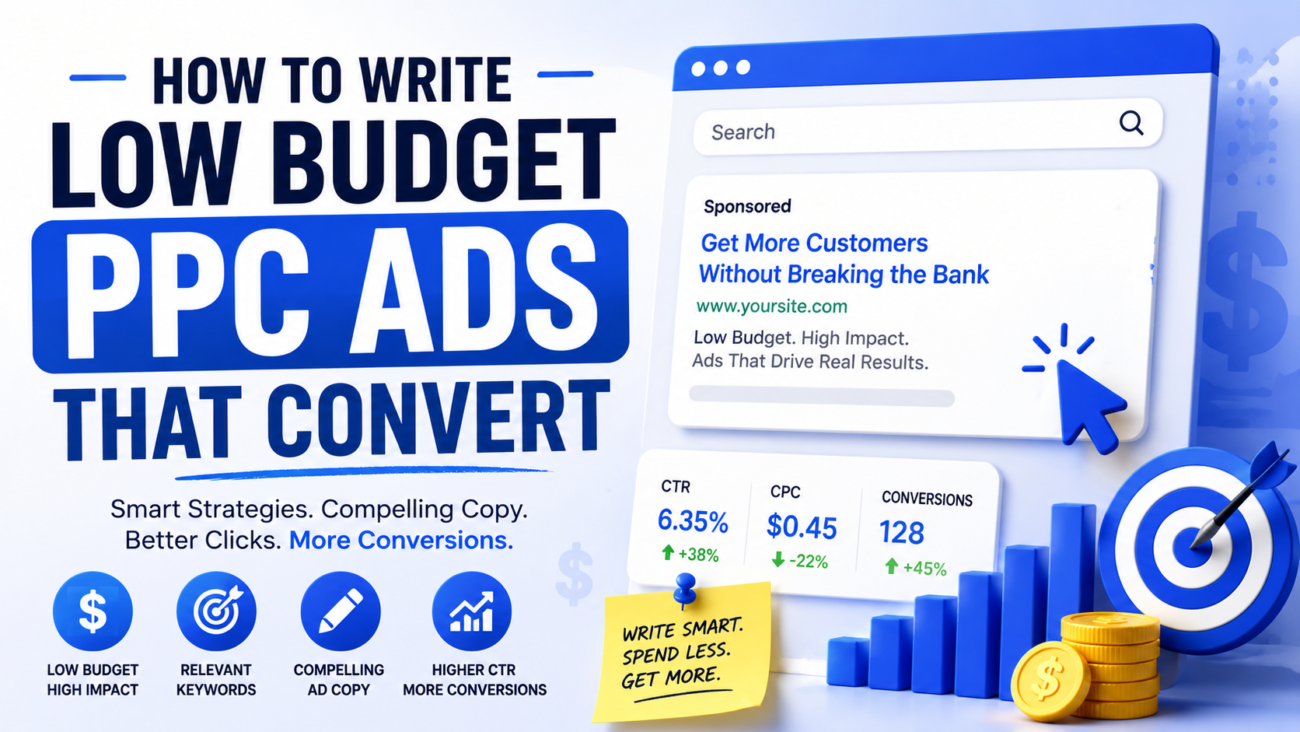
Pay-per-click (PPC) advertising is often associated with large marketing budgets, expensive keywords, and fierce competition. However, businesses with limited budgets can still generate impressive results by creating highly optimized campaigns. The secret isn’t spending more—it’s writing better ads and targeting the right audience.
If you’re looking for Cheap PPC Advertising strategies that actually convert, you’re in the right place. Whether you’re a small business owner, freelancer, startup, or blogger, this guide will show you how to maximize every advertising dollar while increasing clicks, leads, and sales.
PPC Advertising Statistics 2026
Latest Google Ads & PPC Benchmarks
Sources
- WordStream / LocaliQ Google Ads Benchmarks 2026
- Google Ads Help Documentation
- Google Ads Industry Benchmark Reports
Instead of competing with massive corporations on budget, you’ll learn how to outperform them through smarter copywriting, precise targeting, and continuous optimization.
What is Cheap PPC Advertising?
Cheap PPC Advertising refers to running effective pay-per-click campaigns while keeping costs as low as possible without sacrificing conversions.
Rather than focusing solely on reducing cost-per-click (CPC), successful advertisers optimize their campaigns to improve:
- Click-Through Rate (CTR)
- Quality Score
- Conversion Rate
- Return on Ad Spend (ROAS)
- Cost Per Acquisition (CPA)
A low-cost campaign that generates no conversions is still expensive. The goal is to create ads that attract the right users and encourage them to take action.
Why Most Low Budget PPC Campaigns Fail
Many advertisers assume that lowering bids automatically saves money. Unfortunately, that’s rarely the case.
Common mistakes include:
- Targeting broad keywords
- Writing generic headlines
- Ignoring negative keywords
- Sending traffic to poor landing pages
- Using weak calls-to-action
- Never testing different ad variations
Even a small advertising budget can outperform larger competitors when campaigns are properly optimized.
Start with Highly Targeted Keywords
Keyword selection determines whether your ads reach buyers or casual browsers.
Instead of targeting expensive broad keywords like:
- shoes
- lawyer
- insurance
- marketing
Focus on long-tail keywords such as:
- affordable running shoes
- divorce lawyer consultation
- cheap PPC advertising services
- local digital marketing agency
Long-tail keywords usually have:
- Lower competition
- Lower CPC
- Higher purchase intent
- Better conversion rates
This simple adjustment often reduces advertising costs significantly.
Understand Search Intent
Before writing any advertisement, understand why someone is searching.
Search intent generally falls into four categories:
Informational
Users want information.
Example:
“How does PPC work?”
These searches rarely convert immediately.
Commercial
Users compare products or services.
Example:
“Best PPC agency”
Good opportunity for educational content.
Transactional
Users are ready to buy.
Examples:
- Buy PPC management
- Affordable Google Ads service
- Cheap PPC advertising
These keywords deserve most of your budget.
Navigational
Users search for a specific brand.
These generally produce limited opportunities unless you’re advertising your own brand.
Write Headlines That Stop Scrolling
Your headline determines whether someone clicks.
Great PPC headlines usually include:
- Main keyword
- Benefit
- Number
- Power word
- CTA
Examples:
- Cheap PPC Advertising That Actually Works
- Increase Sales Without Increasing Ad Spend
- Affordable PPC Campaigns Starting Today
- Get More Leads for Less
- Small Budget? Big PPC Results
Avoid vague headlines like:
“Our Marketing Services”
Specific headlines consistently outperform generic ones.
Focus on Benefits Instead of Features
Many advertisers describe what they offer.
Successful advertisers explain why users should care.
Instead of:
“We provide PPC management.”
Say:
“Lower your advertising costs while increasing qualified leads.”
People buy outcomes—not services.
Always answer:
What’s in it for the customer?
Include Numbers Whenever Possible
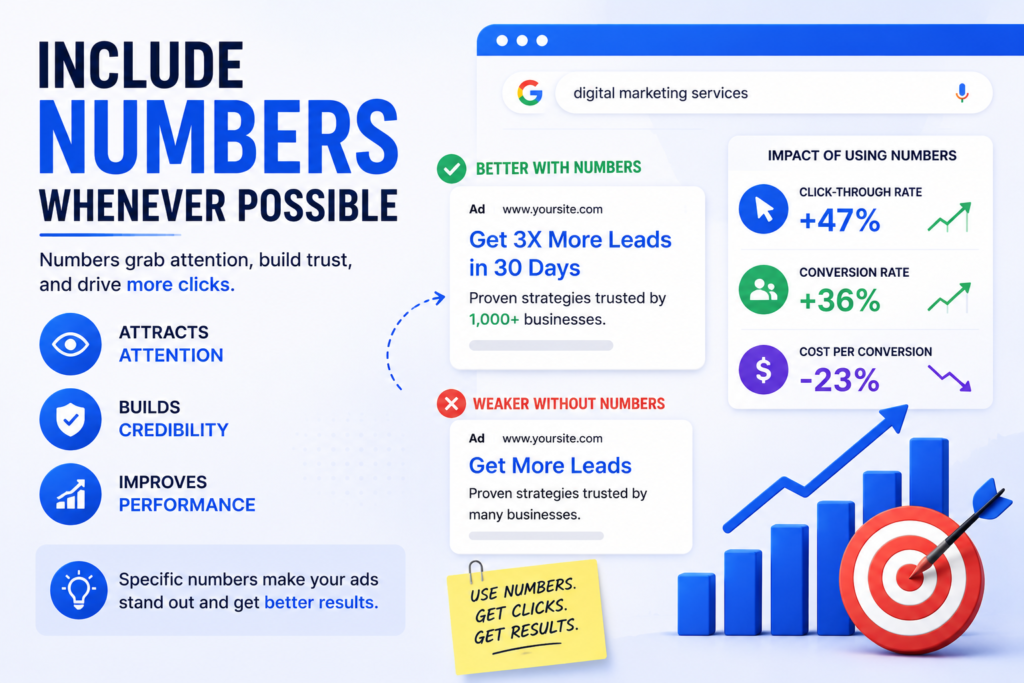
Specific numbers increase credibility.
Examples include:
- Save 35% on advertising costs
- Setup in under 24 hours
- Trusted by 500+ businesses
- Free consultation
- 7-day optimization
Numbers naturally attract attention inside search results.
Create Strong Calls-to-Action
Every ad should tell users what to do next.
Examples include:
- Get Started
- Book Today
- Claim Your Free Audit
- Start Your Campaign
- Request a Quote
- Learn More
- Download Free Guide
Weak CTAs usually lead to lower conversion rates.
Match Your Ad with the Landing Page
A common reason PPC campaigns fail is message mismatch.
If your ad says:
“Affordable PPC for Small Businesses”
Your landing page should immediately repeat that message.
Consistency improves:
- User experience
- Quality Score
- Conversion rates
- Cost per click
Google rewards relevance.
Use Emotional Triggers
People often buy emotionally before justifying logically.
Power words include:
- Free
- Instant
- Proven
- Easy
- Exclusive
- Affordable
- Guaranteed
- Fast
- Trusted
- Limited
Use them naturally rather than stuffing every headline.
Optimize Your Display URL
Your display URL should reinforce trust.
Instead of:
example.com/page?id=54
Use:
example.com/Cheap-PPC-Advertising
Clean URLs improve credibility and click-through rates.
Improve Your Quality Score
Quality Score affects:
- CPC
- Ad placement
- Visibility
Improve it by:
- Writing relevant ads
- Using focused keywords
- Improving landing page speed
- Increasing CTR
- Creating better user experiences
Higher Quality Scores often mean paying less for every click.
Use Negative Keywords
Negative keywords prevent wasted spending.
For example, if you’re selling premium services, exclude searches like:
- free
- jobs
- salary
- tutorial
- internship
- course
Filtering irrelevant traffic dramatically improves ROI.
Run A/B Tests
Never assume your first advertisement is the best.
Test different versions of:
- Headlines
- Descriptions
- CTAs
- Keywords
- Landing pages
- Offers
Even small improvements can produce major gains over time.
Monitor Performance Metrics
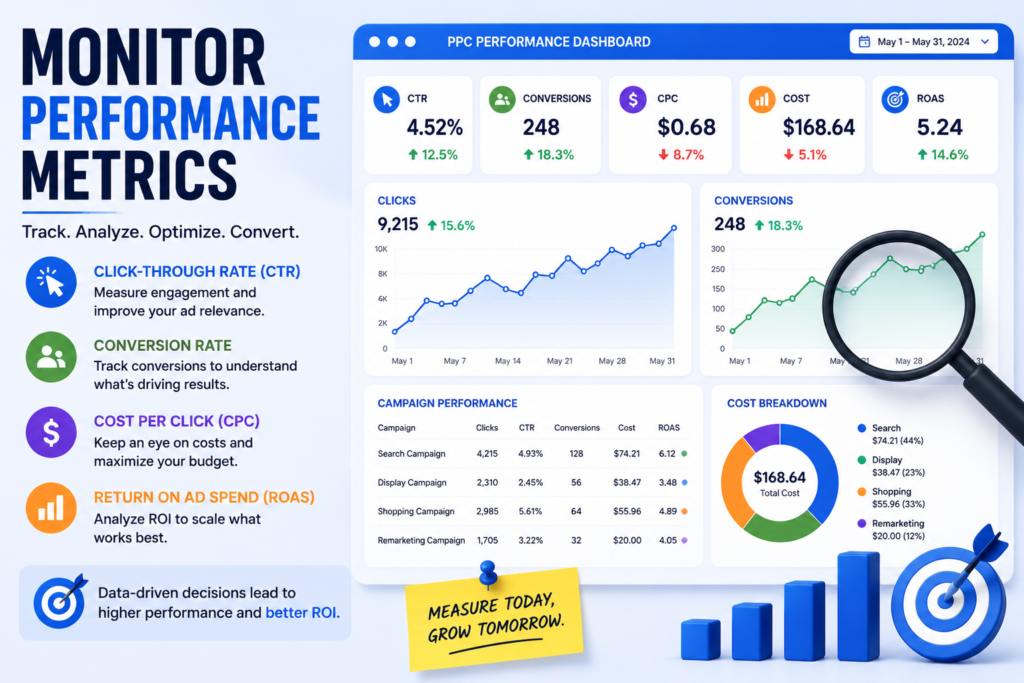
Successful PPC advertisers monitor data consistently.
Important metrics include:
- CTR
- CPC
- Conversion Rate
- CPA
- ROAS
- Quality Score
- Impression Share
Remove underperforming ads and invest more in high-converting campaigns.
Use Ad Extensions
Ad extensions increase visibility without increasing bids.
Useful extensions include:
- Sitelinks
- Call extensions
- Structured snippets
- Price extensions
- Promotion extensions
- Callout extensions
Extensions occupy more screen space and typically improve click-through rates.
Focus on Mobile Users
Most PPC traffic now comes from smartphones.
Ensure your landing page:
- Loads quickly
- Has readable text
- Features large buttons
- Includes easy forms
- Uses responsive design
Poor mobile experiences waste advertising budgets.
Write for Humans First
Search engines reward ads that users engage with.
Avoid robotic keyword stuffing like:
“Cheap PPC Advertising cheap PPC services affordable PPC cheap ads.”
Instead, write naturally.
For example:
“Our affordable PPC campaigns help small businesses generate more leads without overspending.”
Natural writing converts better.
Budget Allocation Tips
Even a modest monthly budget can perform well.
A sample allocation:
- 70% on proven converting keywords
- 20% on testing new keywords
- 10% on remarketing
Avoid spreading budgets across too many campaigns.
Concentrated spending generates stronger data.
Common Mistakes to Avoid
Many beginners waste money by:
- Choosing broad match keywords
- Ignoring conversion tracking
- Writing generic ads
- Using poor landing pages
- Never testing ads
- Forgetting negative keywords
- Sending all traffic to the homepage
Avoiding these mistakes can dramatically improve campaign performance.
Best Practices for Cheap PPC Advertising
Follow these proven practices:
- Target long-tail keywords
- Improve Quality Score
- Match ads with landing pages
- Use emotional headlines
- Include strong CTAs
- Track every conversion
- Continuously optimize
- Pause underperforming ads
- Test new variations regularly
- Focus on ROI instead of clicks
Resources to help you in PPC Advertising
Continue improving your PPC and digital marketing knowledge with these helpful resources from URLSigma:
- CPC Calculator – Estimate your ideal advertising budget and forecast campaign costs.
- Keyword Density Checker – Optimize your landing page content for better search visibility.
- SEO Title Generator – Create compelling, keyword-rich titles that attract more clicks.
- Robots.txt Generator – Build a properly configured robots.txt file to control search engine crawling.
By combining effective Cheap PPC Advertising strategies with SEO best practices and the right optimization tools, you can reduce advertising costs, improve conversion rates, and maximize your overall digital marketing performance.
Frequently Asked Questions
What is Cheap PPC Advertising?
Cheap PPC Advertising means creating highly optimized pay-per-click campaigns that generate conversions while keeping advertising costs low through smart targeting, quality ad copy, and continuous optimization.
How much should beginners spend on PPC?
Many businesses begin with $5–$20 per day. Start small, analyze results, and gradually increase your budget as profitable campaigns emerge.
Why is my PPC campaign expensive?
Common reasons include poor Quality Scores, broad keywords, low relevance, weak landing pages, and inadequate optimization.
Do long-tail keywords reduce PPC costs?
Yes. Long-tail keywords often have lower competition, lower CPCs, and higher conversion rates, making them ideal for budget-conscious advertisers.
How often should PPC ads be optimized?
Review campaigns weekly and make data-driven improvements. High-budget campaigns may require daily monitoring.
References
- Google Ads Help
- Google Analytics Help Center
- Microsoft Advertising Help
- WordStream Google Ads Benchmarks
Final Thoughts
Running successful Cheap PPC Advertising campaigns isn’t about having the biggest budget—it’s about making smarter decisions. By choosing the right keywords, writing compelling ad copy, improving your Quality Score, and continually testing your campaigns, you can achieve impressive results while keeping costs under control.
Remember that every click should have a purpose. Focus on attracting the right audience, delivering a clear message, and guiding users toward a meaningful action. Over time, these small improvements compound into lower acquisition costs, higher conversion rates, and a stronger return on investment.
Whether you’re promoting a local business, an online store, or a service-based company, disciplined optimization will always outperform unnecessary spending. Start with a clear strategy, monitor your data closely, and refine your campaigns consistently. That’s the foundation of profitable, budget-friendly PPC advertising.
