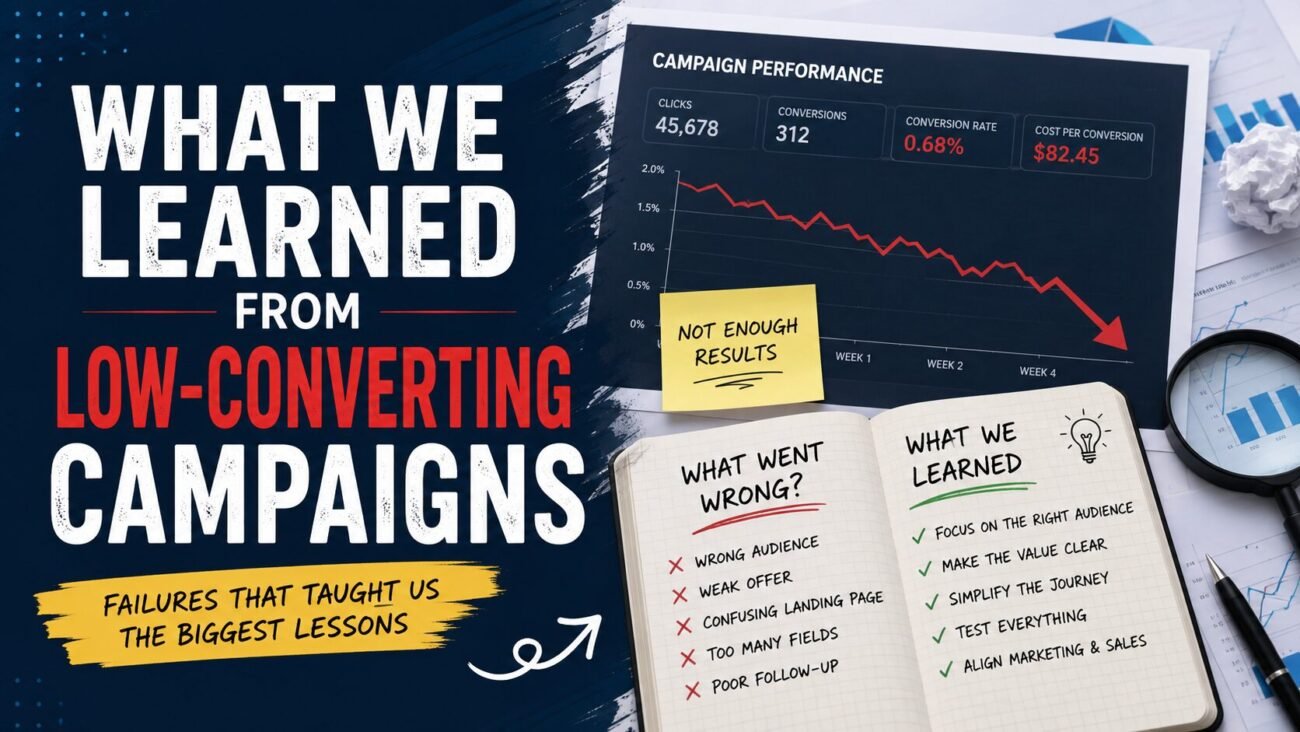
Some marketing campaigns look perfect when they launch.
The creative is polished.
The copy sounds convincing.
The targeting appears accurate.
The budget has been approved.
The campaign goes live.
And then… nothing happens.
A few clicks come in. Maybe some impressions look impressive. The reach is growing. The dashboard is full of numbers.
But the conversions are missing.
The leads are expensive.
The sales team is not excited.
And suddenly, a campaign that looked promising on paper starts feeling like a complete failure.
But here is something we learned after managing and studying low-converting campaigns.
A campaign that does not convert is not necessarily useless.
In many cases, low-converting campaigns teach you more than successful campaigns ever could.
When a campaign works, you may not always know exactly why it worked. Maybe the audience was already interested. Maybe the offer was strong. Maybe the timing was perfect.
But when a campaign fails to convert, the problems become much easier to investigate.
Something is broken.
The question is, what?
The First Lesson: Clicks Are Not Conversions

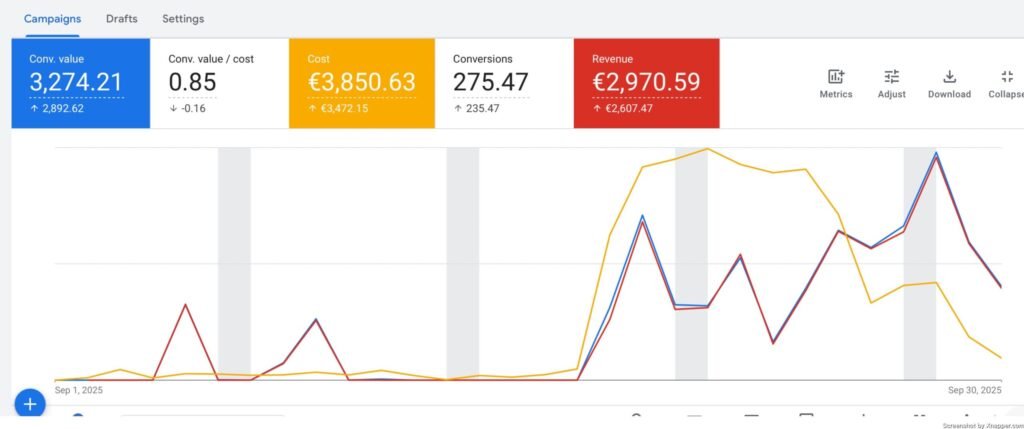
One of the biggest mistakes marketers make is celebrating clicks too early.
A campaign may receive hundreds or thousands of clicks and still produce almost no meaningful results.
This can be confusing.
You look at the campaign dashboard and see a healthy click-through rate. The cost per click looks acceptable. People are engaging with the advertisement.
So why are they not converting?
Because a click only tells you that someone was interested enough to investigate.
It does not mean they are ready to buy.
A person may click an ad because the headline is interesting. They may click because the image catches their attention. They may click accidentally. They may even click because they want to understand what the advertisement is about.
The real test begins after the click.
What happens next?
Does the landing page match the advertisement?
Is the offer clear?
Does the visitor understand what to do?
Is there enough trust?
Are there too many fields in the form?
Is the product or service actually relevant to the visitor?
A campaign can generate plenty of traffic and still fail because the traffic is not moving further down the funnel.
That was one of the clearest lessons from low-converting campaigns.
Do not confuse attention with intent.
The Ad Can Be Good and the Campaign Can Still Fail
This is a difficult lesson for marketers because it challenges the way we normally evaluate advertising.
A campaign may have a good advertisement.
The creative may look professional.
The copy may be well-written.
The audience may even be engaging with the content.
And yet, the campaign can still produce poor results.
Why?
Because advertising is not an isolated activity.
The ad is only one part of the journey.
Imagine seeing an advertisement that promises a simple solution to a problem.
You click it.
The landing page takes ten seconds to load.
The headline is completely different from the advertisement.
The offer is unclear.
There are multiple buttons competing for your attention.
The form asks for unnecessary personal information.
Would you continue?
Probably not.
This is why looking only at the ad can be dangerous.
The complete customer journey needs to be studied.
The advertisement gets the attention.
The landing page creates understanding.
The offer creates desire.
The conversion process removes friction.
If any one of these stages fails, the entire campaign can suffer.
A Low Conversion Rate Often Hides a Bigger Problem
A conversion rate is just a number.
It tells you what happened.
It does not always tell you why it happened.
For example, imagine a campaign that receives 1,000 visitors and produces only 10 leads.
The conversion rate is 1%.
That sounds poor.
But why is it poor?
There could be several reasons.
Maybe the audience was wrong.
Maybe the landing page was confusing.
Maybe the offer was not attractive.
Maybe the form was too long.
Maybe the campaign was targeting people who could not afford the product.
Maybe the audience was interested but not ready to take action.
The conversion rate itself does not answer these questions.
This is why low-converting campaigns need investigation rather than immediate judgment.
The first question should not be, “Why did this campaign fail?”
The better question is, “At which stage did the campaign lose people?”
That question changes everything.
The Funnel Must Be Examined Step by Step
A campaign should be treated like a journey.
First, people see the advertisement.
Then, some of them engage.
Some click.
Some visit the landing page.
Some begin filling out a form.
Some submit the form.
Some answer the phone.
Some become qualified prospects.
Eventually, a small percentage become customers.
At every stage, people leave.
That is normal.
The problem occurs when an unusually large number of people disappear at one specific stage.
For example, suppose an advertisement receives 50,000 impressions and 2,000 clicks.
That may be a strong result.
But if only 20 people submit a form, the problem may not be the advertisement.
The issue may be after the click.
On the other hand, if the landing page receives 2,000 visitors and 500 people submit forms, but the sales team finds that almost every lead is irrelevant, the problem may be targeting.
This is why campaign analysis needs more than one metric.
The cost per click is important.
The click-through rate is important.
The landing page conversion rate is important.
The lead quality is important.
The sales conversion rate is important.
Looking at only one number can create a completely wrong conclusion.
Sometimes the Target Audience Is Simply Wrong

One of the most expensive mistakes in advertising is targeting people who are capable of seeing the advertisement but unlikely to take action.
This can happen easily.
A campaign may target a broad geographic area.
The audience may have interests related to the industry.
The demographics may appear suitable.
But being interested in a topic does not mean being ready to buy.
For example, someone may be interested in luxury cars but have no intention of purchasing one.
Someone may be interested in real estate content but have no budget for a property.
Someone may click an advertisement for a professional service because they are curious, not because they need the service.
This is why audience research is so important.
The question is not simply, “Who might be interested in this?”
The better question is, “Who has a real reason to take action right now?”
That difference can completely change campaign performance.
A low-converting campaign may not have a creative problem at all.
It may have an intent problem.
Broad Targeting Is Not Always the Answer
Broad targeting has become popular because platforms have become better at using their algorithms.
Sometimes, broad targeting works extremely well.
But broad targeting does not mean completely ignoring the customer.
The platform still needs enough information to understand what kind of person is likely to convert.
If the offer is highly specific, the campaign should communicate that clearly.
The creative should make it obvious who the offer is for.
The message should filter out irrelevant people.
This is something low-converting campaigns often reveal.
When your message is too broad, you may get more attention but less action.
You may attract people who are curious about the topic but have no interest in the actual product or service.
More reach is not always better.
Sometimes, fewer people with stronger intent are far more valuable than thousands of casual visitors.
The Offer Is Often More Important Than the Advertisement
Marketers frequently spend hours creating advertisements.
They debate the headline.
They test images.
They adjust the button.
But sometimes the real problem is the offer itself.
A weak offer cannot always be rescued by better advertising.
Imagine two campaigns.
The first says, “Contact us to learn more.”
The second says, “Get a free consultation and receive a personalized recommendation based on your requirements.”
The second offer gives people a clearer reason to act.
The offer answers the question every potential customer is asking.
“What do I get if I take the next step?”
If the answer is unclear, conversions usually suffer.
This does not mean every campaign needs a discount.
A strong offer could be a consultation, a demonstration, a test drive, a free assessment, useful information, early access, or a clear solution to a specific problem.
The important thing is value.
People need a reason to exchange their time and information.
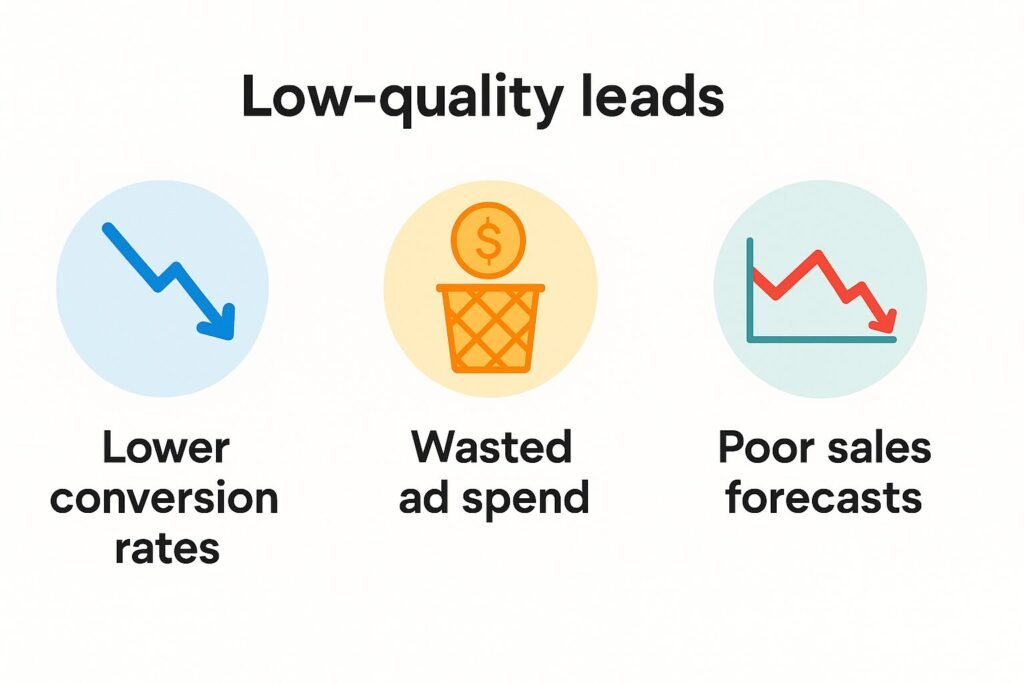
Low-Quality Leads Can Make a Campaign Look Better Than It Is

Another important lesson is that lead volume can be misleading.
A campaign may generate 100 leads.
That sounds excellent.
But what if 80 of those leads are irrelevant?
What if 30 entered fake information?
What if most of the remaining leads never answer the phone?
Suddenly, the campaign does not look so successful.
This is why lead quality must be measured.
A campaign should not be judged only by the number of leads it generates.
The more important questions are:
How many leads were actually relevant?
How many could be contacted?
How many showed genuine interest?
How many became sales opportunities?
How many eventually purchased?
A campaign that generates 20 highly qualified leads may be far more successful than one that generates 200 poor-quality leads.
This is especially important for businesses with high-value products and services.
The cheapest lead is not always the most valuable lead.
The Sales Process Can Destroy a Good Campaign
This is one of the most overlooked problems in digital marketing.
A campaign can generate quality leads and still fail to produce sales.
Why?
Because marketing does not end when the lead is generated.
The follow-up process matters.
A lead may submit a form because they are interested right now.
If nobody contacts them for two days, their interest may disappear.
If the first call is poorly handled, the opportunity may be lost.
If the sales team does not understand the campaign promise, the customer experience becomes inconsistent.
This creates an important lesson.
Marketing performance cannot be evaluated independently from sales performance.
If the campaign generates qualified leads but the business does not convert them, the problem may be in the follow-up process.
Sometimes, the marketing team is blamed for poor sales even though the leads were good.
Other times, the marketing team celebrates lead volume while the sales team struggles with poor-quality prospects.
The solution is better communication between both sides.
Marketing needs feedback from sales.
Sales needs to understand where the leads are coming from.
The entire process needs to be measured from advertisement to revenue.
Landing Pages Need to Remove Doubt
A person who clicks an advertisement is usually looking for confirmation.
They want to know if the offer is relevant to them.
They want to know whether the business is trustworthy.
They want to know what happens next.
A landing page that creates more questions than answers will usually struggle.
The headline should match the promise made in the advertisement.
The page should explain the value quickly.
The call to action should be obvious.
The design should not distract from the main goal.
Trust signals can also make a significant difference.
Testimonials, reviews, credentials, case studies, guarantees, and clear contact information can help reduce hesitation.
A visitor does not need to be convinced that a company is perfect.
They need enough confidence to take the next step.
Too Many Questions Can Kill Conversions
Forms are another common problem.
Businesses often want as much information as possible.
They ask for names, phone numbers, email addresses, locations, budgets, occupations, requirements, preferences, and several additional questions.
The intention is understandable.
More information can help sales teams qualify leads.
But every additional question creates friction.
The visitor starts wondering why so much information is required.
Some people simply leave.
This creates a difficult balance.
The form should collect enough information to support the business process without making the conversion feel like an application.
The right number of questions depends on the campaign.
A low-friction campaign may only need a name and phone number.
A high-value product may require additional qualification.
The important thing is to ask only what is genuinely useful.
Testing Is Not Optional
One of the biggest lessons from low-converting campaigns is that assumptions are dangerous.
You may believe that one headline is better.
You may believe that a particular audience is ideal.
You may believe that a certain image will generate more clicks.
But until the campaign is tested, these are only assumptions.
Testing allows the market to provide feedback.
You can test different headlines.
Different images.
Different offers.
Different audiences.
Different landing pages.
Different calls to action.
The key is to change one important variable at a time whenever possible.
If you change everything simultaneously, you may improve the campaign without understanding why.
That makes future optimization more difficult.
A campaign should become a learning system.
Every test should answer a question.
Does a more specific message improve lead quality?
Does a shorter form increase submissions?
Does a different audience reduce the cost per qualified lead?
Does a stronger offer improve conversion rates?
The goal is not simply to find a winning advertisement.
The goal is to understand what causes customers to take action.
Sometimes the Timing Is Wrong
Not every campaign fails because of poor marketing.
Timing matters.
A person may be interested in a product but not ready to purchase it today.
Economic conditions can affect demand.
Seasonality can affect results.
Competitor activity can affect attention.
The timing of the campaign can also influence performance.
A campaign that performs well during one period may perform differently months later.
This is another reason not to make dramatic conclusions from a single campaign.
A low-converting campaign may be a signal that the market is not ready at that particular moment.
That does not necessarily mean the product or strategy is permanently wrong.
It may mean the campaign needs a different angle.
The Most Important Lesson: Diagnose Before You Optimize
When a campaign performs poorly, the natural reaction is to change everything.
New creative.
New audience.
New landing page.
New budget.
New campaign objective.
Sometimes this works.
But often, it creates more confusion.
If the campaign suddenly improves, you may not know what caused the improvement.
If it gets worse, you have even less information.
The better approach is diagnosis.
Look at the data.
Find where the biggest drop-off happens.
Speak to the sales team.
Review the actual leads.
Read customer responses.
Study the landing page.
Check the campaign promise.
Then make a specific change based on a specific problem.
If the problem is poor-quality traffic, improve targeting.
If the problem is poor conversion after the click, improve the landing page.
If the problem is low-quality leads, improve qualification.
If the problem is slow follow-up, fix the sales process.
Optimization should be based on evidence.
Not frustration.
What We Would Do Differently Next Time
After studying low-converting campaigns, the approach becomes much more disciplined.
We would spend more time understanding the customer before launching.
We would define what a successful conversion actually means.
We would track the entire customer journey instead of focusing only on clicks and leads.
We would make sure the advertisement and landing page communicate the same message.
We would test offers instead of assuming the offer is strong enough.
We would measure lead quality, not just lead quantity.
We would involve the sales team earlier.
Most importantly, we would avoid making emotional decisions based on a few days of performance.
Campaigns need data.
But they also need context.
A campaign may look terrible because of one metric and promising because of another.
The job of the marketer is to understand the difference.
Final Thoughts
Low-converting campaigns are frustrating.
There is no point pretending otherwise.
You invest time, money, and effort into a campaign hoping that people will respond.
When they do not, it is easy to label the campaign a failure and move on.
But that can be a wasted opportunity.
A low-converting campaign is a source of information.
It can reveal that the audience is wrong.
It can expose a weak offer.
It can identify problems in the landing page.
It can reveal a complicated form.
It can show that the sales process needs improvement.
It can even teach you that the market is not ready.
The biggest lesson is simple.
Do not ask only whether a campaign converted. Ask what the campaign taught you.
Because every campaign is feedback.
Some campaigns reward you with sales.
Others reward you with information.
The best marketers learn how to use both.
And sometimes, the campaigns that perform the worst become the ones that improve your marketing the most.
